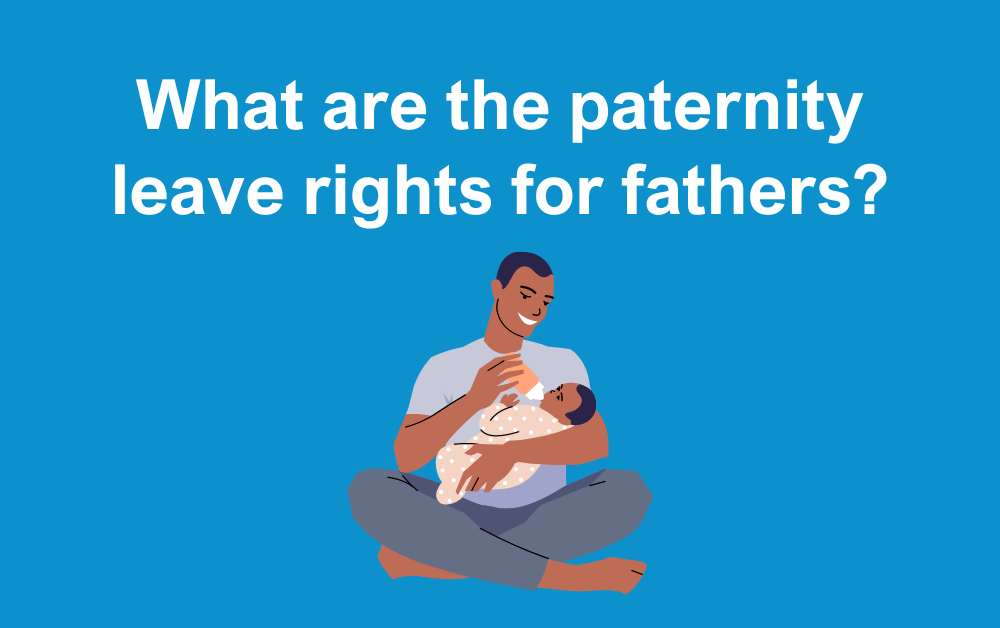
What are the paternity leave rights for fathers?

We get asked HR related questions every day and each week we will be sharing our top question of the week that we have been asked here at The HR Booth.

In this week’s question of the week, Alistair discusses paternity leave.

Question

We have recently had a new appointment start with us and he is asking what happens as his wife is due a baby in November. Could you please give me some information on paternity leave?

Answer

If he has 26 weeks service, 15 weeks before the due date, he will be eligible for shared parental leave where he and his wife can effectively share her maternity leave.  Not many males have taken up this option since this legislation came in during April, but it’s there if he’s eligible.  However, if he has less than 26 weeks service then he will not be eligible for this.

Instead, he will be eligible for 2 weeks paternity leave, which can be taken in blocks of one week and must be taken within 56 days of the birth.  He needs to give details of the dates he wishes to apply for and if he wants to change these he must give you 28 days’ notice.

He will be entitled to be paid Paternity Pay which is currently £139.58 per week.  He can apply for a week’s annual leave and then Paternity Leave, allowing him 2 weeks off but without having to take 2 weeks at the lower rate of pay.  Again, a lot of males tend to use annual leave and not apply for paternity leave due to the pay, but it’s there if he wants to take the time without impacting on his annual leave.

Key thing is to try and get some notice around the dates he wishes to take.

Any issues let me know.

Your Turn

Have any of your staff used shared parental leave since it came into place?

Let us know by leaving a comment.
AI and Automation in Business: What Employers Need to Consider

AI and Automation in Business: What Employers Need to Consider

AI and automation are now widely used across UK businesses, helping organisations streamline processes, improve efficiency, and support decision-making. From automated systems to AI-powered tools, technology is becoming a routine part of how businesses operate....

Trade Union Law Changes From 18th February 2026

Trade Union Law Changes From 18th February 2026

Industrial action and trade union law changes came in to force on 18th February 2026. This means dismissing an employee for taking part in industrial action is considered 'automatically unfair'. This removes the previous 12-week qualifying period, meaning employees...

Long Term Sickness: Managing Absences in Manufacturing

Long Term Sickness: Managing Absences in Manufacturing

The most recent report by the ONS showed that sickness levels in the manufacturing industry was at 2.6%. This was the second highest out of all other sectors. Long-term sickness can have a significant impact in manufacturing environments, where roles are often...

Social Care Management Courses to Reduce Staff Turnover

Social Care Management Courses to Reduce Staff Turnover

Social care management courses are becoming essential for providers looking to reduce high staff turnover and strengthen leadership capability across their services. High staff turnover remains one of the biggest challenges facing the care sector. Combined with...

Fire and Rehire Employment Rights Bill Restrictions Delayed

Fire and Rehire Employment Rights Bill Restrictions Delayed

The Government has confirmed that stronger protections aimed at tackling controversial dismissal and re-engagement practices will now be delayed until next year. The proposed Fire and Rehire Employment Rights Bill update is designed to prevent employers from...

Health and Care Worker Visa: Employer Guide for 2026

Health and Care Worker Visa: Employer Guide for 2026

The Health and Care Worker Visa has played a vital role in helping care providers address ongoing staffing shortages and access skilled international talent. For many organisations, it became a key part of workforce planning and service continuity. However,...